May Day AGAIN?

So I’ve gotten tired of hearing stump speeches from the Red Huckleberries (Vaccinium parvifolium). And irritated by the Tall Oregon Grape (Mahonia aquifolium) going around boasting “We’re going to make America grape again!” I’m longing for the good ol’ days of Occupy. So in honor of May Day, let’s look back a little bit to 2012:

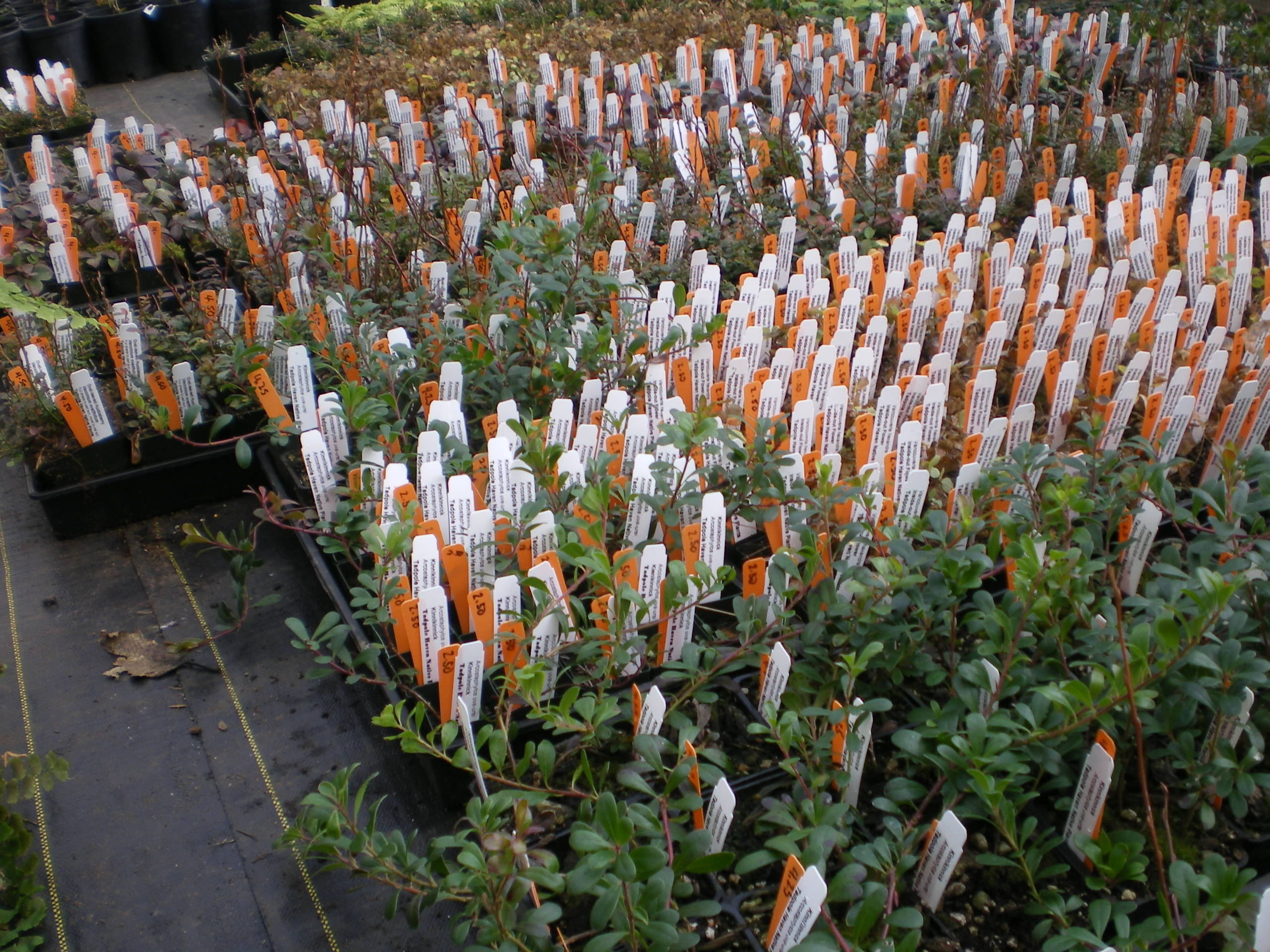
Native Plant Appreciation Week is over but the residual effects are still with us. AND it was May Day a few days ago.  All week long, I have been beleaguered by sign-waving Native Plants.  They are standing tall and proud in the nursery (egged on by the free-range huckleberries in the woods adjacent). 

 One of the Grand Firs (Abies Grandis) gave a speech:  “It’s time to take a stand! Haven’t we been downsized enough?  Our hard-working limbs, leaves and roots disrespected enough?”

The Large-Flower Fairybells (Prosartes smithii) straightened their curving stems a bit and waved their creamy yellow flowers. 

Grand Fir continued. “Those humans have contracted out most of our work!  They dig pits to replace whole ecosystems and claim they will keep the water clean.  Are they doing the job RIGHT?”  Grand Fir paused for a moment to curl a branch into a full-on sneer.  “NO-O-O-O!  How can a hole in the ground do YOUR jobs of cushioning the earth from pelting raindrops and rushing, polluted runoff?  How can a gutter or a storm drain provide a home for a Junco or a Tree Frog?”

At this point, the demonstration took on a surprising degree of diversity. Scolding noises came from the trees.  A tree frog croaked and the newly-hatched tadpoles in the kiddy pools waggled their tails.  And the little pots of mosses, carrying signs that said “Cushioning is our job!” and “Moss-Out Kills!” and “Solidarity with Peat!” stumped out to the driveway and staged a Moss-In.  The moss on the branches of the tall Douglas Firs (Pseudotsuga menziesii) overhead went wild, throwing lichen bits and hollering.

 Grand Fir, encouraged, worked herself up a little more. “Do they think that LAWNS or poodle-puff-who-knows-what-they-are-supposed-to-be shrubs will really give them what they need?  They need life!  And they get that from us!  WE are the 99%!  Just try to imagine how many plants it takes to keep one of those too-smart-for-their-own-good primates alive?”

 “I know, I know!” squeaked a plump baby Vine Maple (Acer circinatum) in a 1-gallon pot, flapping its new, still-soft leaves. 

 Grand Fir ignored him. “Let me tell YOU!  There’s a big debt outstanding to Mother Nature!  It’s high time humans stop taking it out of OUR cambiums!”

The Red-Flowering Currants (Ribes sanguineum) began swaying back and forth, making a deep rumbling (which surprised me, since they are only a foot tall):  “No more bailouts!  No more bailouts!”

 Grand Fir raised a limb to silence the somewhat off-topic Currants. “It’s high time they APPRECIATED us!”

 I’ve been hearing this kind of talk all week, and frankly, I have had enough. Time for these plants to march on out of here.  Time for you to give them gainful employment in your yard, doing water quality protection, habitat support and general environmental cleanup.  And allow them to reclaim some space for Mother Nature. 

Don’t be afraid to come—these highly qualified job candidates will welcome your support. And I will make them put away their signs.

MAY DAY!

It’s May Day!  When I was a child, my siblings and I prepared for May Day by making May baskets out of construction paper. Then on May Day we filled them with flowers that our mother helped us pick from the yard.  We delivered them surreptitiously to each neighbor’s house, sneaking the colorful baskets onto the porch, ringing the doorbell then quickly hiding in the shrubbery.  It was so much fun!  I know the neighbors appreciated our efforts.  I think it helped me appreciate that I was part of a community.

May Day just happens to fall in the middle of Native Plant Appreciation Week!  Check out the Washington Native Plant Society’s web page for events and sales.

Us humans tend to appreciate native plants for the ways that they directly benefit us; we enjoy looking at Great Camas (Cammassia leichtlinii) and Trillium (Trillium ovatum) flowers or we value the Nootka Rose’s (Rosa nutkana) erosion-preventing ability and the beauty and scent of its flowers.  Particular features of a plant are often reason enough to plant them, but it is easy to lose sight of the Big Picture: the health of natural systems – communities of which we are a part.

Biodiversity, buffering against the effects of climate change, protection of clean water – these are just a few ways that native plant species contribute to the whole.  A rich variety of native plants helps provide built-in resilience against natural and human-caused disruptions.

What does “resilience” mean? My Webster’s Unabridged’s first definition: “An act of springing back; rebound, recoil, elasticity.”  How do we maintain and increase this resilience?  By caring for natural areas, maintaining ample buffers around water, protecting and increasing forest cover, and turning our yards and gardens into habitat.  We increase our local ecosystem’s resilience when we avoid using pesticides and weed-killers and make sure runoff from our driveways and roofs can be naturally absorbed into the soil on our own property.

Resilience in the ecosystem protects native creatures, such as amphibian species.  And ultimately, human life.  Native plants, from the majestic Western Red Cedar to the graceful blades of Oregon Iris are individual components participating in the community of life.

Trillions of Trilliums

April 11, 2014

Right now is prime Trillium time in the forests of Western Washington. They are bright pure white, but will gradually turn pink and may darken all the way to purple before the flower withers.  It ages very gracefully.  I should take notes.

 This wild lily had an aura of magic for me as a child (still does). My mother would fiercely tell me never to pick them, impressing on me: “It won’t bloom again for seven years!  SEVEN YEARS!”

 There is a fair amount of truth in that; picking the bloom and it’s three-part leaf will set it back a few years at least. The plant has lost most of a season’s worth of photosynthesis and the next year has to draw on whatever reserves of energy it has left in the bulb.

 The Western Trillium likes bright shade and moist but not wet conditions. They can be difficult to dig up and move; often the bulb is very deep. But planting out a Trillium “raised in captivity” works fine. It does fine in home gardens and will multiply and form clusters of blooms when it’s really happy.  The bulbs multiply, sending up more stems, and seeds will sprout as well.  Don’t mean to brag, but Brian counted 22 blossoms last week on one clump in our yard.  Top that!

 The first year seedlings are just a narrow blade approximately ½” long. Second-year seedlings are a single fat leaf about the size of a dime.  Along about the third year, they show the tell-tale three leaflets, but they won’t bloom until the fifth year at the earliest.


True Confessions

I have a confession to make. The name “Tadpole Haven” has a dastardly origin. In the 1920s, a neighbor started a Bullfrog “ranch”, raising the big frogs for their tasty (I guess–never been brave enough to try them) legs, served up at Seattle restaurants. The name of the Bullfrog ranch was –you guessed it– Tadpole Haven. When the Depression hit in the early 1930s, Tadpole Haven went belly up, so to speak, the Bullfrogs were let loose into the adjoining lake and ever since have been serenading us on summer nights, simultaneously snarfing down the native salamanders, frogs, toads, ducklings and pretty much anything else they can get their big mouths around.

So Tadpole Haven is a recycled, or rather, re-used, name. Actually, I re-purposed the name, applying it to a higher cause than the original. It was originally used to market an invasive species, introduced by humans, which wreaked havoc on the ecosystem. Now, I use the name to market native species (of plants) which humans re-introduce to areas upon which havoc had previously been wrought by humans and their invasive hench-frogs. And from ANY frog’s point of view, a place that nurtures their growth and life is an honest Haven; a euphemistic Haven that is really a butcher shop is no Haven at all.

Pacific Chorus Frogs have laid quite a few clutches of eggs on the native plants in the nursery’s kiddie pools (we really are a Haven). They are elongating into the shape of tadpoles. The warm spring days will help them develop until they hatch.

In the lake, Northwest Salamander eggs are developing within the firm gel of their soft-ball-sized egg masses. The female amphibians lay their egg clutches on the stems of native plants: sedges, rushes, Water Parsley (Oenanthe sarmentosa), Marsh Cinquefoil (Comarum palustre), Red-Twig Dogwood (Cornus sericea), to name a few. Long-toed Salamanders also lay their eggs in the lake, but those eggs are hard to see; the egg clutches are less than an inch long. Hopefully, we also have some Red-Legged Frogs breeding in the lake.

The tiny Pacific Chorus Frogs (adult’s bodies don’t get much over one inch long) come in a few different colors. Usually they are green, but also can be beige or brown. Each frog has a unique pattern of spots. They are also called Tree Frogs or Spring Peepers. They are one of several species of amphibians that live in and around Tadpole Haven.

Like Pacific Chorus Frogs, Northwest Salamanders, Long-toed Salamanders, Red-Legged Frogs and Rough-skinned Newts live most of their lives in the forests or wetland margins surrounding the bodies of water where they breed, lay their eggs and live their pre-metamorphosis tadpole phase. The invasive Bullfrogs (boo-hiss) need year-round water; their pollywogs take two summers to mature into frogs, and the adults remain in or near water most of their lives migrating as needed to find new territories.

During our years as volunteer monitors, my cousin Andy and I found occasional Red-Legged Frog egg masses the first few years (see my previous blog entry). We never saw, or expected to see, the eggs of the Oregon Spotted Frog, which has been declared extirpated in the area. I have not seen any Western Toads since I was a kid. The Western Toad suffered a population crash due to a fungal disease. But the loss and degradation of habitat caused by humans are the biggest factors causing loss of amphibians (these threats will likely be magnified in the future by the effects of climate change and disease—sigh).

Red-Legged Frogs spend their adult lives in the forest. Ensatinas and Western Redback Salamanders are salamanders that live their entire life cycle on land, in forests. As development has destroyed our forests, it has killed off these forest-dependent amphibians. So it is important to protect still-standing forests from clearing, grading and building. Buffers that are required around wetlands, and greenbelts winding through housing developments are no substitute for healthy local forests, which shelter many more species.

Many amphibians are especially sensitive to chemical changes in their habitat: for example, road, fertilizer and pesticide runoff into the waters in which they breed. Or pesticide and chemical fertilizer use in back yards: the Western Redback Salamander has no lungs–it breathes through its skin, directly absorbing every toxin.

If I could work up an appetite for Bullfrog legs, maybe I could reduce ONE of the threats to native amphibians. My neighbor Neal toldme how to catch bullfrogs at night: “Frogs’ eyes glow in the light. The light paralyzes them. So you get two people, one with a flashlight. You listen for the croaking –then you row in slow and quiet ‘til you’ve got the flashlight an inch from their nose, then you grab’em behind the ears and put’em in a bucket.”

Then you either cook ’em up for supper, or humanely kill them by sticking them in the freezer. Eew! (That last suggestion from Brian Bodenbach,* who contributed to this tome)

Sounds like fun, but I think I’ll wait for summer! Bullfrog-pops anyone?

* Brian Bodenbach, Biosphere Landscape Co., brian@biospherecompany.com

Get your green on

The Pacific Chorus Frogs are in full voice, the males calling to the silent females.  If you live near a wetland that has even a little bit of open water, you hear them.

Their voices remind me of my amphibian-monitoring days with my cousin Andy*.  We volunteered with King County in the late 1990s to basically help count amphibian eggs, a good way to gauge the health of certain amphibian populations and to get a picture of the general health of the ecosystem.  After undergoing training, we and dozens of other newly-hatched citizen scientists were turned loose on our assigned local lake or wetland.  In our case we were assigned to the small lake on our family property, adjacent to the plant nursery.

Our assignment: go forth 3-4 times February to April, identify and record the location and condition of amphibian eggs, and make notes of other amphibian sightings.

February is a killer time to be out in a canoe in awkward raingear, moving too slowly to keep warm, trying to write legibly on our “Rite-in-the-Rain” recording sheets.  We earned our pay!  …wait a minute, what pay? We did that for nothing?

Well, not for nothing. We got an unexpected payoff.  Andy was a salesman, and he would take the afternoon off for amphibian monitoring.  He came hyped-up in his Brooks Brothers cuffed slacks and tasseled loafers, spouting enthusiastic “Absolutely!”s while tugging on the hip boots and raingear.  As we pulled the canoe out of the boathouse, waded into the water by the dock to look for salamander egg masses, paddled together and began systematically surveying the shoreline, peering into the water to find the egg masses, Andy’s energy level shifted.

Andy changed from pumping out high-frequency self-generated energy to a receptive mode.  He’d gently reach into the freezing water with his bare hand and cradle a clutch of frog or salamander eggs so we could identify the species and estimate the percentage of live eggs.  Before we got half-way around the lake, we both settled into a rhythm more natural than that of our harried daily lives.  In February, that rhythm included shivering, but we agreed that we always felt more grounded and relaxed.  Turns out that as we studied frog habitat, that habitat asserted itself as our own natural habitat, reclaiming our psyches. A wonderful side effect was the deepening of our friendship.

We were keenly aware that amphibians depended on quality habitat for their health: clean water, appropriate native plants to lay their egg clutches on, adjacent forest cover and minimal predation and disease.  But our own need for a healthy natural habitat only asserted itself as we immersed ourselves in amphibian habitat.

So get outside!  Join the frogs and get your green on! 

*Andy McDonald, April 1955-March 2013


Silver Linings

We’re in the late-February slog of a western Washington winter. Personally, I’m done with winter, but it doesn’t seem to be done with me. I’m trying to look for the silver lining (I can really see it today—what is that yellow-white orb in the sky?). Wet, cold weather is an important part of keeping Washington green. And right now, the native seeds we planted last fall are undergoing natural “stratification”; many species need two to three months of cold weather to soften them and prepare them for germination. And the plants know where we are in the calendar; Pretty Shootingstar (Dodecatheon pulchellum) and Great Camas (Cammassia leichtlinii) are fully informed and sprouting above the cold soil. Both grow from bulbs and seed themselves fairly easily.

Pretty Shootingstar is the easiest of the Shootingstars to grow. It does well in partial shade to full sun. It does best in moist, even wet conditions.

The bulb sends up leaves in early spring, then gratifies the gardener with gorgeous magenta flowers. Later, the seed pods drop seed which will readily germinate and thrive IF not out-competed by weeds OR victimized by indiscriminate weeding!

Great Camas does well in soil that holds winter moisture – it can be completely inundated — but dries out in the summer. It is easy to unwittingly weed out the seedlings, which resemble blades of grass.

Pretty Shootingstar-DodecatheonPulchellum IMGP4357CamassiaLeichtlinii at TH

Flower & Garden Show

How about those Seahawks? This is why we won! IMGP4970pom-pom

Tadpole Haven’s natives are ready to parade downtown Wednesday morning to welcome the Seahawks home…OH! AND to strut their stuff at the Northwest Flower & Garden Show!  Our plants will be at the WSNLA’s “Treasure Island Marketplace” (booth 2418).

Are you craving light?  I can’t help thinking about light!  What a relief that days are growing longer!  A week ago, during that glorious stretch of sunny weather, a friend spotted some people sunbathing on a beach towel in the middle of a pasture.  I took time to stand in a patch of sun, sleeves pushed up, eyes closed, face turned to that primeval source of life-giving energy.  I figured here was my drug-and-pill-free chance to naturally absorb Vitamin D and beat back Seasonal Affective Disorder.  Plus it gave me a spiritual boost –almost enough to convert me to paganism!

Plants are doing the same thing –responding to the return of life-giving light.  The most obvious are the bulbs that are coming up in everyone’s gardens; in the nursery, a few Great Camas (Cammassia leichtlinii) have poked above the soil. The buds on Red-Flowering Currant (Ribes sanguineum) and Red Alder (Alnus rubra) are swelling and changing color.  Western Hazelnut (Corylus cornuta) buds are fat and fuzzy, and the catkins of the big ones in the woods have been showing for a month or more.  Cascara (Rhamnus purshiana) actually has miniature leaves forming on its branchtips.  Of course, wintertime is the best time to see our native mosses in full glory, both in the forest and in pots in the nursery.  Same goes for Licorice Fern (Polypodium glycyrrhiza), which revels in winter light, often high, high in the branches of majestic Big-Leaf Maples (Acer macrophyllum).  The pointed red shoots of Goatsbeard (Aruncus dioicus) are poised at ground level, ready to blast off like a surface-to-air missile.

IMGP4974 READY FOR SHOWREADY FOR THE SHOW!

A Good Time to Plant

I enjoyed getting away from the nursery last month to plant native plants in the Upper Bear Creek Natural Area with Water Tenders.  Twenty of us planted almost 150 trees and shrubs (Western White Pine, Douglas Fir, Nootka Rose, Snowberry, Sitka Spruce and Sword Fern).  It was hard work!  

 I spend most of my time in the nursery, working hard to coax plants to grow in rather artificial conditions. Their pots are too hot in the summer and too wet in the winter; their roots are separated from the biological interactions that occur in nature between fungi and the roots of companion plants; they have to depend on unreliable me to provide needed nutrients.  They don’t all survive Tadpole Haven Boot Camp.  So it’s gratifying to give them a proper home.

 Last Saturday seven or eight of us finished mulching in the natural area, which is just downstream of the nursery.  I brought some native Woodland Strawberries (Fragaria vesca) and three of us took time to plant them into the freshly spread mulch.  My knees were wet and my hands were cold by the time we finished, but I didn’t mind. I was thinking ahead; I’m hoping to find a nice patch of tasty berries along about June!

 It’s hard to think about summer when we are headed into the darkest time of year, but it helps to get outside and plant.  Imagine the rewarding feeling when you see evidence that the new plants are pulling nutrients from the soil and putting on new growth (especially rewarding when you can taste the evidence!).

Oficially Autumn

Oficially Autumn.  Cottonwood (Populus trichocarpa) leaves clatter down, each leaf disproportionately loud.  After the recent rains, Chanterelle mushrooms popped up along the driveway like storm-scattered gold coins.  The Douglas Squirrels have been busy for weeks cutting down cones and stuffing themselves with the seeds.  They seem unimpressed by the dramatically scarred Douglas Fir (Pseudotsuga menziesii) that was struck by lightning a couple weeks ago.  They are busy collecting its cones, skittering around in the Cascade Oregon Grape (Mahonia nervosa) at its base.  Our healthy slug population is making love by the light of the harvest moon and laying pearly eggs–so sweet!  L  Many of the Pacific Chorus Frog tadpoles have metamorphosed out of the kiddy pools and hopped into the woods for the winter.

This is a good time to plant; cooler weather means new plants need less water and TLC to get a good start.  Shrubs and trees are flying out of the nursery, many headed for city parks and Snoqualmie Valley farm hedgerows.  Get your piece of the action!

Lightning strike!

Last Thursday’s thunderstorm threw some thrills at Tadpole Haven.  But I had no idea until I drove in the following morning and noticed strips of bark strewn on the driveway.  “Hmm, what’s that from?” I briefly wondered through my morning stupor.  I’d been up late, watching Mother Nature’s light show from my front porch.  “Maybe a bear tore up a log…?”  I promptly forgot about it until I walked over that way later and WOW! I saw the tree!  Either an extremely tall bear tore into it (no, dumb idea) or the big Douglas Fir* had been hit by lightning!  A four-inch wide strip of bark was peeled off the 70-year-old tree, virtually from top to bottom (130’+).  The electricity slammed into the ground at the base of the tree, stripping the bark all the way into the dirt, digging a hole and unearthing an ancient TreeTop Apple Juice can (metal!) that my brother had probably littered there in 1967 (I never littered;  I was good).  Pretty Darn Cool!

See a couple of pictures on our Facebook page, or better yet, come take a look when you visit the nursery. Grow your own thrills!**


 *Pseudotsuga menziesii, for inquiring minds

**Kidding!